Barrow Launches 75.7km GIRAV Feeder Roads Project in NBR
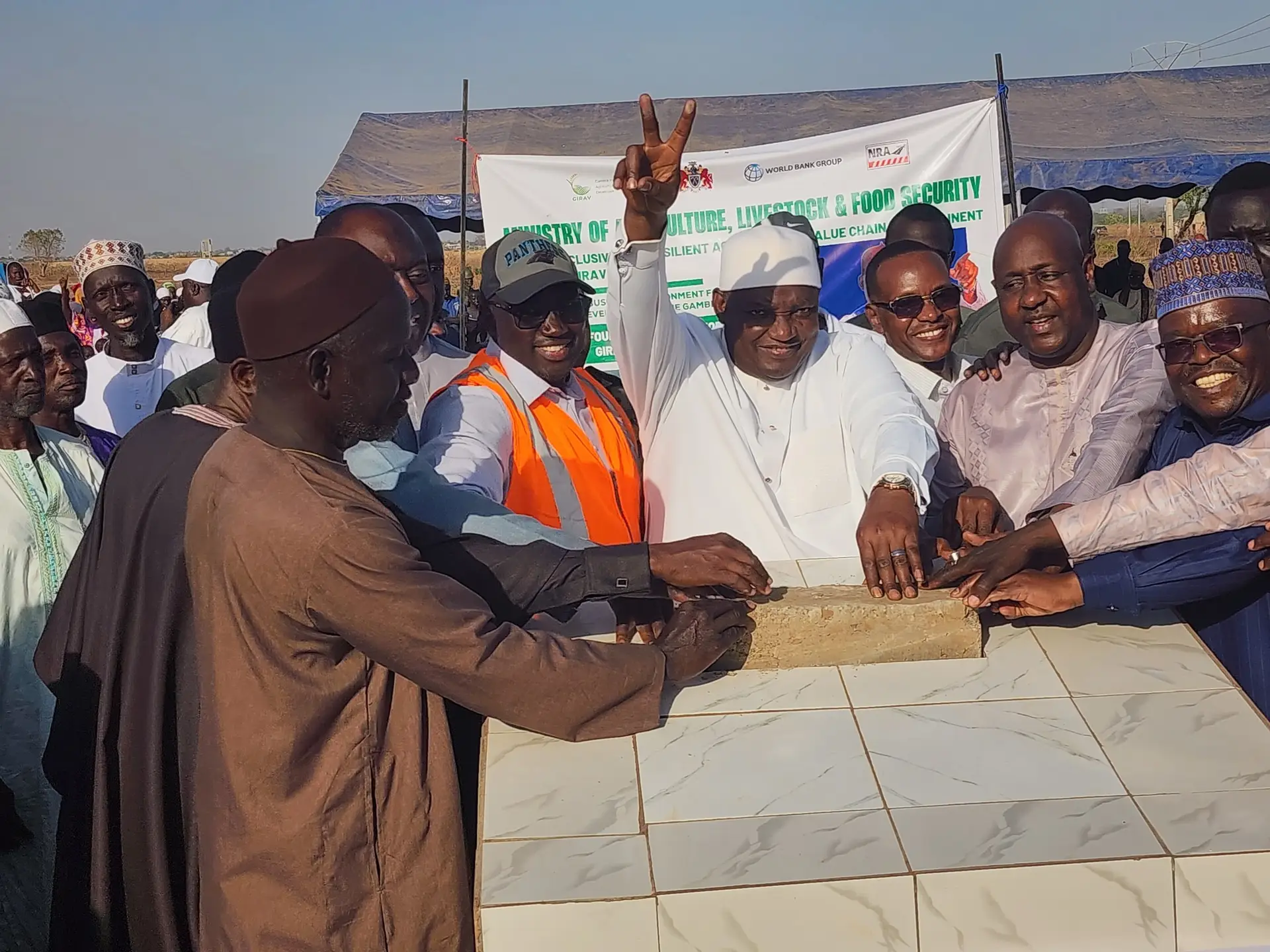
President Adama Barrow on Saturday, 28 March 2026, presided over the foundation stone laying for 75.7 kilometres of feeder roads under the GIRAV Project in the North Bank Region (NBR).
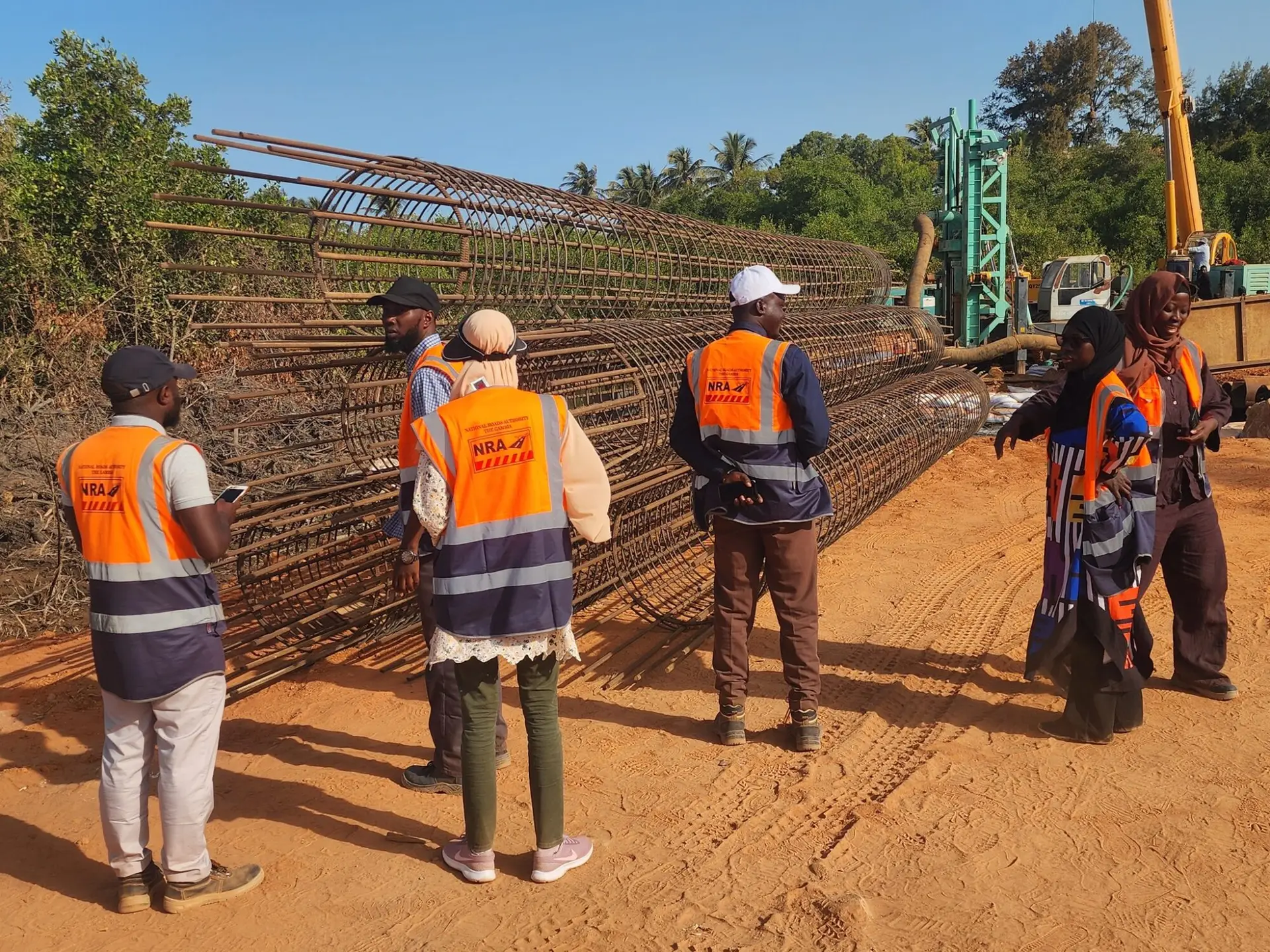
The event, held across eight road sites in the districts of Lower Nuimi, Jokadu and Baddibou, marks a major step toward improving rural connectivity and strengthening access to agricultural areas. The project is expected to facilitate the movement of people, goods, and services, thereby enhancing local trade and livelihoods.
Funded by the World Bank under a two-year programme, the project falls under Lot 2 and is being executed by Chino Gam, a Chinese company with supervision from Pace and Ceeteq Joint Venture (JV).
Speaking at a gathering in Njawara, President Barrow said the initiative is aimed at linking key agricultural production zones directly to major roads, markets and essential social services. He noted that poor road access has long constrained agricultural growth and rural development.
“Agriculture remains the backbone of our economy and the primary source of livelihood for the majority of our people. For too long, farmers have struggled to transport their produce efficiently. These roads are intended to change that reality,” he said.
For his part, Sulayman Sumareh Janneh, Managing Director of the National Roads Authority (NRA), described the GIRAV project as a strong demonstration of the government’s commitment to modernising infrastructure, strengthening agricultural value chains, and improving access for rural communities to markets and essential services.
He noted that the project, which spans all regions of the country, covers a total of 204.7 kilometres of roads to be constructed to standard specifications. The works will include Single Bituminous Surface Treatment (SBST) roads with a 7-metre width, along with the installation of culverts, side drains, and appropriate road furniture.
Mr Janneh emphasised that at the heart of the initiative is a clear national priority: to connect productive communities across The Gambia to the primary road network. He said this is key to unlocking economic potential, reducing inequality, and promoting national cohesion.
He further highlighted that agriculture remains the backbone of the economy and the main source of livelihood for most Gambians, noting that poor road access has long hindered farmers’ ability to transport produce efficiently. “These roads are designed to transform that reality,” he added.
The eight road projects include:
Kerr Jatta–Ndofan–Kerr Wali (7.3km) – Lower Nuimi
Fass Njaga Choi–Maneh–Ngare/Sadir Jobe–Ndongu Charr to Ndongu Kebbeh (9km) – Lower Nuimi
Kerr Selen–Kerr Sidik–Kabakoto/Kerr Ousmanbuso–Kerr Malick Nana to Hakalang Road (5.8km) – Jokadu
Kuntaya–Jissa Ker Amadou to Kerr Omar (7km) – Jokadu
Land Sarr–Macca Farafenni to Main Road (5.6km) – Baddibou
Illiasa–Jiman Sarr Baa to Katchang (7.2km) – Baddibou
Yallal Tankunjala–Bantang Killing–Yuna Angalleh–Taaly Ya–Jajari India to Illiasa (9.3km) – Baddibou
Minteh Kunda–Kerr Ardo to Njawara (24.5km) – Lower Nuimi
The roads, totalling 75.7km, will be constructed using Single Bituminous Surface Treatment (SBST) standards.